

Cezzi's
© 2026 Cezzis.com | All rights reserved.
© 2026 Cezzis.com | All rights reserved.
A late-19th-century stirred apple brandy cocktail built with Bénédictine, yellow Chartreuse, and bitters for layered herbal depth.
Servings
1
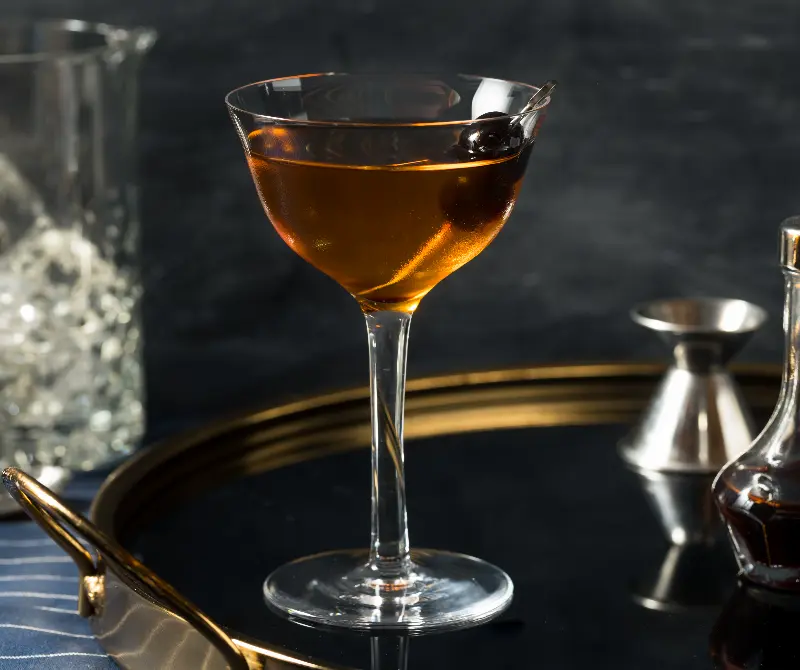
The Widow's Kiss is one of the more memorable names in classic American bartending, and the drink beneath the title lives up to it. Built from apple brandy, Benedictine, yellow Chartreuse, and bitters, it is rich, herbal, and firmly spirit-forward.
This is not a cocktail of freshness or lightness. It is a cocktail of depth.
Unlike many old drinks with cloudy provenance, the Widow's Kiss has a solid documentary foothold. It appears in George J. Kappeler's Modern American Drinks from 1895, which places it squarely in the late-19th-century canon. That alone gives it an important place in the development of American cocktail culture, especially among drinks that use multiple liqueurs not just for sweetness, but for layered aromatic effect.
Its dramatic name has helped preserve its reputation, but the drink itself is why it remains interesting.
Apple brandy provides the central fruit-and-wood foundation. Benedictine adds honeyed herbal warmth, while yellow Chartreuse brings softer spice and monkish botanical complexity rather than the sharper intensity associated with the green version. Bitters keep the blend from drifting into syrupy territory.
The result is a cocktail that feels autumnal and meditative without becoming muddy. Every ingredient is strong, yet the finished drink stays coherent.
Part of the Widow's Kiss appeal is that it anticipates modern craft-cocktail tastes. Contemporary drinkers often seek bitter, herbal, spirit-heavy drinks with layered aromas, and this 19th-century formula delivers exactly that. It does so without any modern reinvention.
That continuity is part of its charm. The drink feels historical and current at the same time.
The Widow's Kiss remains compelling because it offers more than vintage novelty. It is a serious, beautifully structured stirred cocktail with an unmistakable personality. Herbal, deep, and slightly severe, it rewards slow drinking.
Best in cooler months and late-evening service, especially when a contemplative stirred drink is more appealing than a brighter aperitif. 🥃🍎
Nutritional and allergen information are estimates and for educational purposes only. Ingredient formulations change frequently across different commercial brands. A generic ingredient name (e.g., "coffee liqueur") may contain hidden allergens, dairy, or animal products depending on the specific brand you purchase.
Always review the manufacturer packaging and actual ingredients you use before consuming, especially if you have severe food allergies or dietary restrictions. Use this website at your own risk.
Discover other related cocktails you might also enjoy, with similar ingredients, style, or spirit.

Base: Rye, Cognac
5.0 average rating
Base: Rye, Sweet Vermouth
5.0 average rating
Base: Rye, Sweet Vermouth
5.0 average rating
Base: Apple Brandy
5.0 average rating
Base: Bourbon, Absinthe
5.0 average rating
Base: Rye
5.0 average ratingExplore the curated collections this cocktail belongs to, grouped by spirit, season, holiday, and occasion.

Find cozy fall cocktails with apple, pear, cinnamon, maple, and richer seasonal flavors.

Explore winter cocktails with rich flavors, warming spices, and festive cold-weather appeal.

Browse Halloween cocktails with spooky colors, playful presentation, and easy party-ready flavors.

Explore classic cocktails like old fashioneds, sours, martinis, and other timeless favorites.

Find after-dinner cocktails with rich flavors, dessert-friendly profiles, and digestif-style appeal.
Discover other related cocktails you might also enjoy, with similar ingredients, style, or spirit.
Base: Rye, Cognac
5.0 average ratingBase: Rye, Sweet Vermouth
5.0 average ratingBase: Rye, Sweet Vermouth
5.0 average ratingBase: Apple Brandy
5.0 average ratingBase: Bourbon, Absinthe
5.0 average ratingBase: Rye
5.0 average ratingExplore the curated collections this cocktail belongs to, grouped by spirit, season, holiday, and occasion.
Find cozy fall cocktails with apple, pear, cinnamon, maple, and richer seasonal flavors.
Explore winter cocktails with rich flavors, warming spices, and festive cold-weather appeal.
Browse Halloween cocktails with spooky colors, playful presentation, and easy party-ready flavors.
Explore classic cocktails like old fashioneds, sours, martinis, and other timeless favorites.
Find after-dinner cocktails with rich flavors, dessert-friendly profiles, and digestif-style appeal.