

Cezzi's
© 2026 Cezzis.com | All rights reserved.
© 2026 Cezzis.com | All rights reserved.
A red wine punch lengthened with citrus, brandy, fruit, and soda for shared-service drinking.
Servings
1
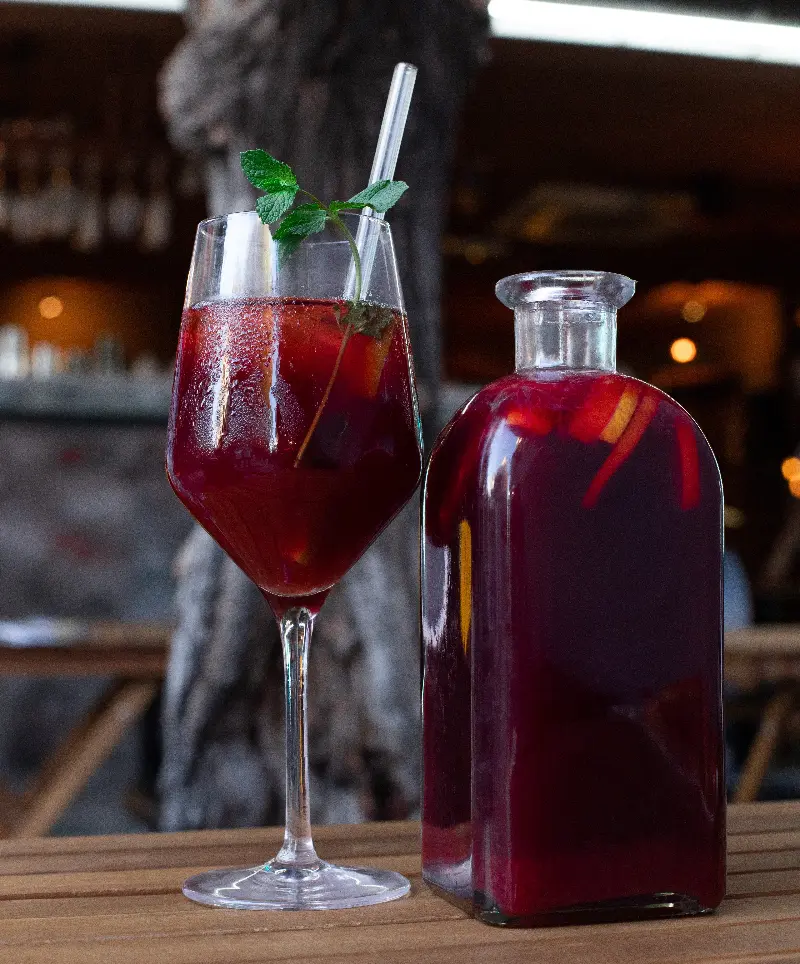
The Sangria is less a single cocktail than a shared ritual—an expressive wine-based punch rooted in Spanish social culture. Built around red wine, fresh fruit, and a touch of spirit, it is designed for gatherings where time, conversation, and flavor are allowed to unfold together.
Its name, derived from sangre (blood), reflects its deep ruby color and its long-standing association with Iberian drinking traditions.
At its core, Sangria begins with red wine, typically young and fruit-forward, providing structure, tannin, and depth. Into this base is introduced a medley of fresh fruit—commonly oranges, lemons, apples, and berries—each contributing aromatic oils, acidity, and natural sweetness.
As the fruit macerates, it slowly infuses the wine, softening its edges and creating a layered, evolving profile.
Brandy is often added to deepen the structure and raise the overall intensity of the drink. It introduces warmth, subtle oak character, and a gentle alcoholic lift that balances the fruit and wine base.
Rather than dominating, the spirit acts as a reinforcing backbone, giving Sangria its characteristic depth and slow-building strength.
Citrus plays a dual role in Sangria: it brightens the wine’s natural acidity while also contributing essential oils from the peel. Sweeteners such as sugar or orange juice are often used to adjust balance, ensuring the final profile remains refreshing rather than overly tannic.
The result is a fluid equilibrium between sweet, tart, and structured wine character.
Unlike many cocktails meant for immediate consumption, Sangria evolves over hours. As it rests, the fruit continues to release flavor, the wine absorbs aromatic compounds, and the overall profile becomes more integrated and rounded.
This slow transformation is central to its identity—it is a drink that improves with patience and shared presence.
While red wine is the traditional base, Sangria exists in numerous regional variations. White wine versions (Sangria blanca) offer a lighter, more floral profile, while sparkling additions introduce effervescence and lift.
Despite these variations, the core philosophy remains consistent: fruit, wine, and spirit brought together in balance and abundance.
Visually, Sangria is vibrant and abundant. Deep red wine is interspersed with floating citrus slices and fruit pieces, creating a composition that feels both rustic and celebratory.
Served in pitchers or large vessels, it emphasizes sharing over individual consumption.
The finish of Sangria is soft and evolving. Wine tannins are mellowed by fruit infusion, citrus lingers lightly on the palate, and brandy provides a warm undertone that fades gradually.
It is a drink that does not conclude abruptly, but continues to develop even after the glass is empty—an expression of time, fruit, and conviviality.
Best in spring and summer for afternoon and early-evening group gatherings. Also ideal for summer holiday cookouts and shared weekend gatherings. 🍷🎉
Nutritional and allergen information are estimates and for educational purposes only. Ingredient formulations change frequently across different commercial brands. A generic ingredient name (e.g., "coffee liqueur") may contain hidden allergens, dairy, or animal products depending on the specific brand you purchase.
Always review the manufacturer packaging and actual ingredients you use before consuming, especially if you have severe food allergies or dietary restrictions. Use this website at your own risk.
Discover other related cocktails you might also enjoy, with similar ingredients, style, or spirit.
Explore the curated collections this cocktail belongs to, grouped by spirit, season, holiday, and occasion.

Browse light spring cocktails with citrus, herbs, floral notes, and fresh seasonal flavors.

Discover refreshing summer cocktails for hot days, outdoor parties, and easy weekend sipping.

Browse Easter cocktails with spring flavors, lighter styles, and brunch-friendly appeal.

Browse Mother's Day cocktails with brunch-friendly pours, floral notes, and polished celebratory drinks.

Discover 4th of July cocktails for cookouts, fireworks parties, frozen drinks, and summer hosting.

Find Labor Day cocktails for long-weekend gatherings, late-summer patios, and easy party drinks.
Discover other related cocktails you might also enjoy, with similar ingredients, style, or spirit.
Explore the curated collections this cocktail belongs to, grouped by spirit, season, holiday, and occasion.
Browse light spring cocktails with citrus, herbs, floral notes, and fresh seasonal flavors.
Discover refreshing summer cocktails for hot days, outdoor parties, and easy weekend sipping.
Browse Easter cocktails with spring flavors, lighter styles, and brunch-friendly appeal.
Browse Mother's Day cocktails with brunch-friendly pours, floral notes, and polished celebratory drinks.
Discover 4th of July cocktails for cookouts, fireworks parties, frozen drinks, and summer hosting.
Find Labor Day cocktails for long-weekend gatherings, late-summer patios, and easy party drinks.


