Cezzi's
© 2026 Cezzis.com | All rights reserved.
© 2026 Cezzis.com | All rights reserved.
A Brazilian stirred drink of cachaca, vermouth, and bitter liqueur with a darker after-hours profile.
Servings
1
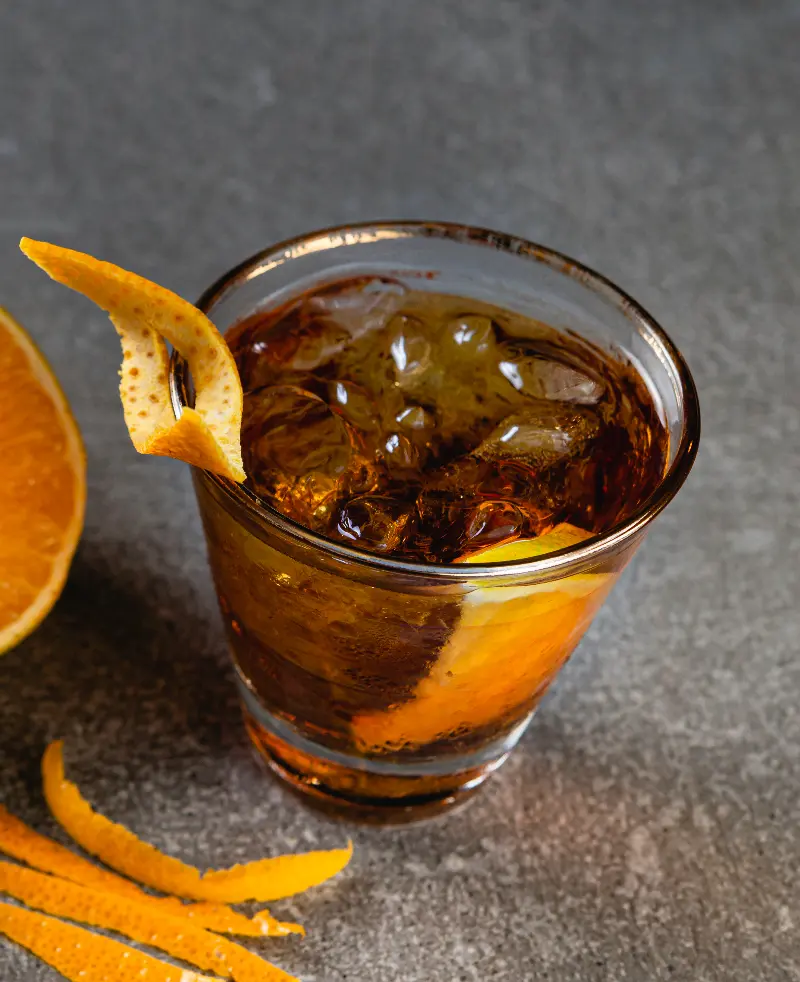
The Rabo de Galo (“cock’s tail” in Portuguese) is a bold, spirit-forward Brazilian cocktail built on simplicity, speed, and cultural adaptation. Originating in São Paulo’s mid-20th-century bar scene, it reflects a time when imported Italian vermouth met locally produced cachaça in bustling urban cafés and counter-service bars.
It is not a delicate drink—it is direct, practical, and deeply tied to the everyday rhythm of Brazilian drinking culture.
At the core of the Rabo de Galo is a straightforward pairing: cachaça and sweet vermouth. Cachaça brings grassy, sugarcane-driven intensity with earthy funk depending on its distillation style. Sweet vermouth contributes herbal sweetness, spice, and a wine-based richness that softens the edges of the spirit.
Together, they create a structured, bittersweet profile where rustic energy meets urban refinement.
The cocktail’s origins are often linked to post-war Brazil, when Italian immigrants and local bartenders began blending available spirits to create quick, satisfying drinks. Vermouth became a popular modifier for cachaça, offering balance and approachability to an otherwise sharp and assertive base spirit.
Over time, the drink evolved into a bar staple—ordered quickly, served simply, and consumed without ceremony.
The Rabo de Galo is typically built over ice and stirred rather than shaken, preserving clarity and emphasizing its spirit-forward nature. The dilution from ice is essential, gently tempering the strength of cachaça while allowing the vermouth’s botanical complexity to emerge.
It is often served in a rocks glass, reinforcing its straightforward, no-frills identity.
What makes the Rabo de Galo compelling is its balance of contrasts. The sweetness of vermouth offsets the raw intensity of cachaça, while subtle herbal bitterness adds depth and structure.
The sugarcane base remains present throughout, grounding the drink in its Brazilian origin and preventing it from becoming overly wine-like or sweet.
In São Paulo’s bar landscape, the Rabo de Galo became a symbol of efficiency and accessibility. It was a drink that required no elaborate technique, no exotic ingredients, and no long preparation—only balance and familiarity with local tastes.
Its endurance speaks to its adaptability and its role as a bridge between traditional Brazilian spirits and European influences.
The finish is warm and steady rather than sharp. Cachaça’s grassy notes linger beneath herbal sweetness, while vermouth leaves a gentle spice and wine-like depth. As the ice continues to dilute the drink, it softens further, becoming more integrated and rounded.
It is a cocktail that does not aim for polish, but for honesty—grounded, functional, and enduring in its simplicity.
Best in late afternoon and evening, especially in casual bar settings. 🌿🥃🇧🇷
Nutritional and allergen information are estimates and for educational purposes only. Ingredient formulations change frequently across different commercial brands. A generic ingredient name (e.g., "coffee liqueur") may contain hidden allergens, dairy, or animal products depending on the specific brand you purchase.
Always review the manufacturer packaging and actual ingredients you use before consuming, especially if you have severe food allergies or dietary restrictions. Use this website at your own risk.
Discover other related cocktails you might also enjoy, with similar ingredients, style, or spirit.

Base: Reposado Tequila, Sweet Vermouth
5.0 average rating
Base: Cachaça
5.0 average rating
Base: Gin, Sweet Vermouth
5.0 average rating
Base: Gin, Campari
5.0 average rating
Base: Scotch, Sweet Vermouth
5.0 average rating
Base: Gin, Sweet Vermouth
5.0 average ratingExplore the curated collections this cocktail belongs to, grouped by spirit, season, holiday, and occasion.
Discover other related cocktails you might also enjoy, with similar ingredients, style, or spirit.
Base: Reposado Tequila, Sweet Vermouth
5.0 average ratingBase: Cachaça
5.0 average ratingBase: Gin, Sweet Vermouth
5.0 average ratingBase: Gin, Campari
5.0 average ratingBase: Scotch, Sweet Vermouth
5.0 average ratingBase: Gin, Sweet Vermouth
5.0 average ratingExplore the curated collections this cocktail belongs to, grouped by spirit, season, holiday, and occasion.