

Cezzi's
© 2026 Cezzis.com | All rights reserved.
© 2026 Cezzis.com | All rights reserved.
A spirit-forward Manhattan variation that balances rye whiskey with equal parts sweet and dry vermouth, finished with aromatic bitters.
Servings
1
The Perfect Manhattan keeps the familiar outline of the Manhattan, but shifts its center of gravity by splitting the vermouth between sweet and dry. That small adjustment changes the drink more than the name suggests, giving it a firmer, leaner profile while preserving the whiskey-led structure that made the original a classic.
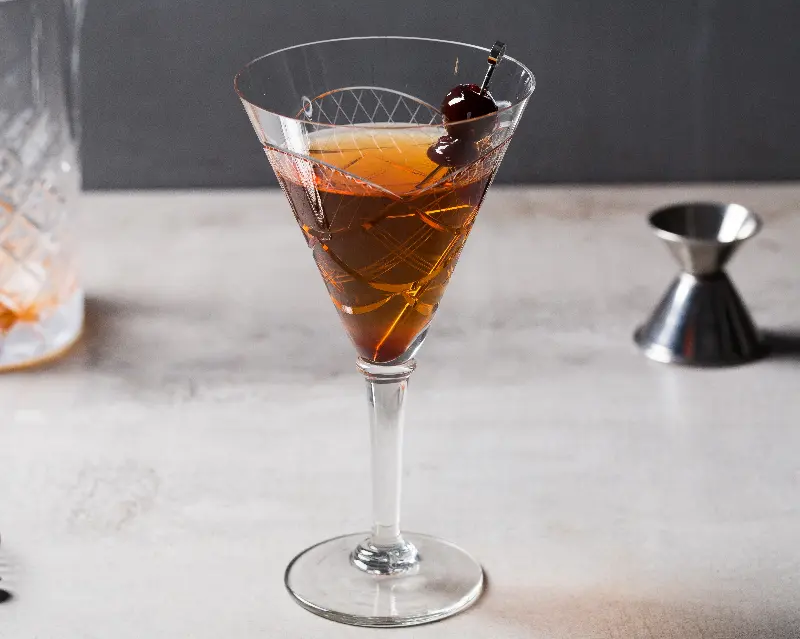
In classic bartending language, "perfect" usually means a drink uses equal parts sweet and dry vermouth. It is a technical label rather than a value judgment. In a Manhattan, that split reins in some of the round sweetness of the standard build and replaces it with a drier, more aromatic finish.
The result is still recognizably a Manhattan: whiskey, vermouth, bitters, and a polished stirred texture. It simply lands with a little more edge and lift.
The Manhattan itself emerged in the late 19th century, and the Perfect Manhattan followed as bartenders and drinkers began adjusting familiar templates through vermouth choice and proportion. Exact first appearances are hard to pin down with certainty, but the variation belongs naturally to the era when vermouth-heavy American bar recipes were flourishing.
That context matters because the Perfect Manhattan is not a modern reinvention. It is part of the old cocktail tradition of subtle specification changes that create distinct drinks without abandoning the parent formula.
The Perfect Manhattan appeals to drinkers who like the Manhattan family but want a touch more dryness and herbal definition. Rye whiskey works especially well here, since its spice stands up to both vermouths without losing shape.
It remains a quiet classic: familiar, structured, and just different enough to reward attention.
Best before dinner or as a measured late-evening sipper when a standard Manhattan feels a little too rich. 🥃🍒
Nutritional and allergen information are estimates and for educational purposes only. Ingredient formulations change frequently across different commercial brands. A generic ingredient name (e.g., "coffee liqueur") may contain hidden allergens, dairy, or animal products depending on the specific brand you purchase.
Always review the manufacturer packaging and actual ingredients you use before consuming, especially if you have severe food allergies or dietary restrictions. Use this website at your own risk.
Discover other related cocktails you might also enjoy, with similar ingredients, style, or spirit.
Explore the curated collections this cocktail belongs to, grouped by spirit, season, holiday, and occasion.

Find cozy fall cocktails with apple, pear, cinnamon, maple, and richer seasonal flavors.

Explore winter cocktails with rich flavors, warming spices, and festive cold-weather appeal.

Find Father's Day cocktails with whiskey-forward classics, bold stirred drinks, and confident summer pours.

Browse whiskey cocktails with bourbon, rye, and other styles ranging from strong classics to smoother mixed drinks.

Explore classic cocktails like old fashioneds, sours, martinis, and other timeless favorites.
Discover other related cocktails you might also enjoy, with similar ingredients, style, or spirit.
Explore the curated collections this cocktail belongs to, grouped by spirit, season, holiday, and occasion.
Find cozy fall cocktails with apple, pear, cinnamon, maple, and richer seasonal flavors.
Explore winter cocktails with rich flavors, warming spices, and festive cold-weather appeal.
Find Father's Day cocktails with whiskey-forward classics, bold stirred drinks, and confident summer pours.
Browse whiskey cocktails with bourbon, rye, and other styles ranging from strong classics to smoother mixed drinks.
Explore classic cocktails like old fashioneds, sours, martinis, and other timeless favorites.


