

Cezzi's
© 2026 Cezzis.com | All rights reserved.
© 2026 Cezzis.com | All rights reserved.
A sophisticated cocktail made with gin and dry vermouth, garnished with an olive or lemon twist. An iconic classic, it epitomizes elegance and simplicity.
Servings
1
The Martini is perhaps the most iconic cocktail in the world, synonymous with sophistication and style. Its exact origins are a bit of a mystery, with several theories and legendary tales surrounding its creation.
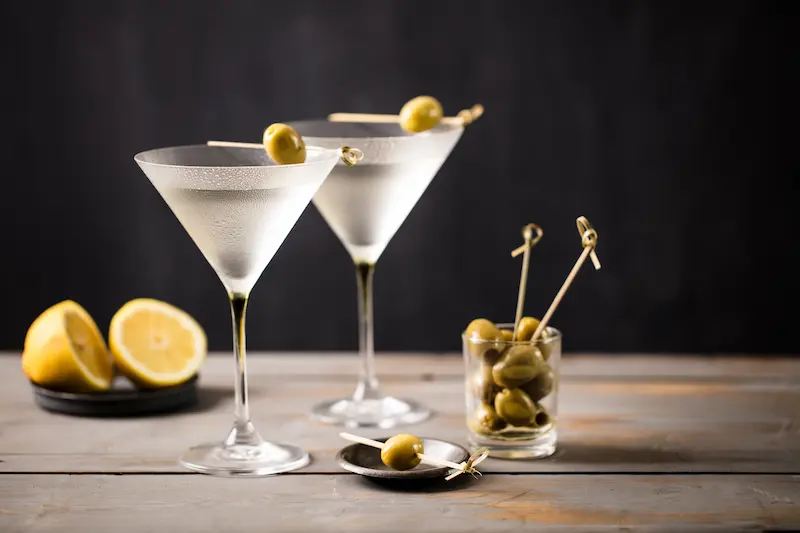
The Martini's history is as intriguing as the drink itself. One theory suggests that it evolved from a cocktail called the Martinez, served at the Occidental Hotel in San Francisco in the early 1860s¹. Another story claims that a bartender in the town of Martinez, California, created the drink³. Yet another possibility is that the name derives from the Italian Martini brand of vermouth¹.
The classic Martini reached its most recognizable form by 1922, where London dry gin and dry vermouth were combined at a ratio of 2:1, stirred with ice, and then strained into a chilled cocktail glass¹. Over time, the amount of vermouth has steadily dropped, with ratios during the 1930s at 3:1 and during the 1940s at 4:1. By the latter part of the 20th century, 5:1 or even 6:1 dry Martinis became the norm¹.
Today, the Martini is often made "extra dry," with little to no vermouth. Some prefer it shaken, not stirred, and others enjoy it with a twist of lemon instead of an olive. The Vodka Martini uses vodka in place of gin and has also become a popular variation¹.
The Martini, with its simple elegance and storied past, remains a staple of the cocktail world. Whether you prefer it with gin or vodka, dry or wet, olive or twist, the Martini offers a timeless experience of refined enjoyment.
Best before dinner, where its bitter-bright edge opens the palate. 🍸🫒✨
Nutritional and allergen information are estimates and for educational purposes only. Ingredient formulations change frequently across different commercial brands. A generic ingredient name (e.g., "coffee liqueur") may contain hidden allergens, dairy, or animal products depending on the specific brand you purchase.
Always review the manufacturer packaging and actual ingredients you use before consuming, especially if you have severe food allergies or dietary restrictions. Use this website at your own risk.
Discover other related cocktails you might also enjoy, with similar ingredients, style, or spirit.
Explore the curated collections this cocktail belongs to, grouped by spirit, season, holiday, and occasion.

Discover Valentine's Day cocktails with elegant presentation, sparkling pours, and date-night flavors.

Browse gin cocktails from crisp classics to botanical drinks with citrus, herbs, and floral notes.

Find simple cocktails with minimal ingredients, quick prep, and easy at-home mixing.

Explore classic cocktails like old fashioneds, sours, martinis, and other timeless favorites.

Browse martinis from classic gin builds to vodka versions and modern twists.
Discover other related cocktails you might also enjoy, with similar ingredients, style, or spirit.
Explore the curated collections this cocktail belongs to, grouped by spirit, season, holiday, and occasion.
Discover Valentine's Day cocktails with elegant presentation, sparkling pours, and date-night flavors.
Browse gin cocktails from crisp classics to botanical drinks with citrus, herbs, and floral notes.
Find simple cocktails with minimal ingredients, quick prep, and easy at-home mixing.
Explore classic cocktails like old fashioneds, sours, martinis, and other timeless favorites.
Browse martinis from classic gin builds to vodka versions and modern twists.


