

Cezzi's
© 2026 Cezzis.com | All rights reserved.
© 2026 Cezzis.com | All rights reserved.
A multi-spirit sour-highball finished with cola and known more for force than subtlety.
Servings
1
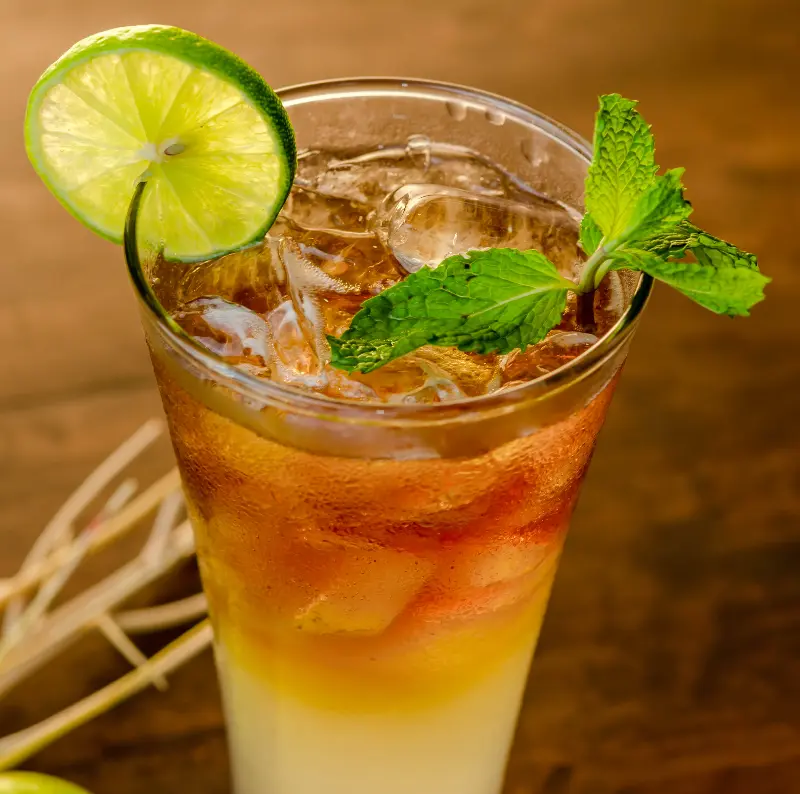
The Long Island Iced Tea is one of the most recognizable—and misunderstood—cocktails in modern drinking culture. Despite its name, it contains no tea at all. Instead, it is a carefully balanced highball of multiple spirits combined with citrus and cola to create the illusion of iced tea in both color and refreshment.
It is a drink defined by contrast: strong yet smooth, complex yet deceptively simple in taste.
What sets the Long Island Iced Tea apart is its unusual foundation of layered base spirits. Vodka, gin, tequila, rum, and triple sec are combined in measured proportion, forming a unified alcoholic backbone rather than a single dominant base.
Each spirit contributes a subtle characteristic:
When properly balanced, no single spirit dominates—the result is cohesion rather than chaos.
Fresh lemon juice is essential in cutting through the intensity of the combined spirits. Its acidity provides brightness and prevents the drink from becoming overly heavy or spirit-forward.
Cola completes the profile, adding color, gentle sweetness, and carbonation. It also creates the visual illusion of iced tea, which is central to the drink’s identity. The effervescence helps integrate the spirits into a smooth, refreshing highball.
The origins of the Long Island Iced Tea are often traced to American bar experimentation in the mid-to-late 20th century, where bartenders explored ways to create high-impact cocktails using multiple base spirits.
Over time, the drink gained a reputation both for its strength and its accessibility. Its mythos grew alongside its popularity, often associated with nightlife culture and social drinking rather than formal cocktail tradition.
Visually, the Long Island Iced Tea closely resembles non-alcoholic iced tea, with its amber-brown hue and cola carbonation. This visual similarity plays a key role in its identity, often surprising those who expect a lighter beverage.
Despite its complexity in ingredients, the drink presents itself as straightforward and familiar—an intentional contrast between appearance and composition.
The Long Island Iced Tea is notoriously difficult to execute well because of its many components. Precision in measurement is critical; even slight imbalance can result in a harsh or disjointed profile.
When properly constructed, however, it achieves a surprising harmony, where alcohol intensity is softened by citrus and carbonation, and no single spirit overwhelms the palate.
The finish of a well-made Long Island Iced Tea is clean and surprisingly refreshing. Citrus lingers alongside subtle sweetness, while the layered spirits fade into a unified warmth rather than distinct edges.
It remains a paradoxical cocktail—both playful and potent, simple in appearance yet complex in structure, and enduring in its cultural presence.
Best for evening social settings, especially in warm weather. 🍹🍋✨
Nutritional and allergen information are estimates and for educational purposes only. Ingredient formulations change frequently across different commercial brands. A generic ingredient name (e.g., "coffee liqueur") may contain hidden allergens, dairy, or animal products depending on the specific brand you purchase.
Always review the manufacturer packaging and actual ingredients you use before consuming, especially if you have severe food allergies or dietary restrictions. Use this website at your own risk.
Discover other related cocktails you might also enjoy, with similar ingredients, style, or spirit.
Explore the curated collections this cocktail belongs to, grouped by spirit, season, holiday, and occasion.

Browse gin cocktails from crisp classics to botanical drinks with citrus, herbs, and floral notes.

Find rum cocktails from tropical favorites to richer spiced and dark rum drinks.

Explore vodka cocktails that are clean, crisp, easy to mix, and highly versatile.
Discover other related cocktails you might also enjoy, with similar ingredients, style, or spirit.
Explore the curated collections this cocktail belongs to, grouped by spirit, season, holiday, and occasion.
Browse gin cocktails from crisp classics to botanical drinks with citrus, herbs, and floral notes.
Find rum cocktails from tropical favorites to richer spiced and dark rum drinks.
Explore vodka cocktails that are clean, crisp, easy to mix, and highly versatile.


