

Cezzi's
© 2026 Cezzis.com | All rights reserved.
© 2026 Cezzis.com | All rights reserved.
A hot coffee drink of Irish whiskey, sugar, and lightly floated cream built for warmth rather than complexity.
Servings
1
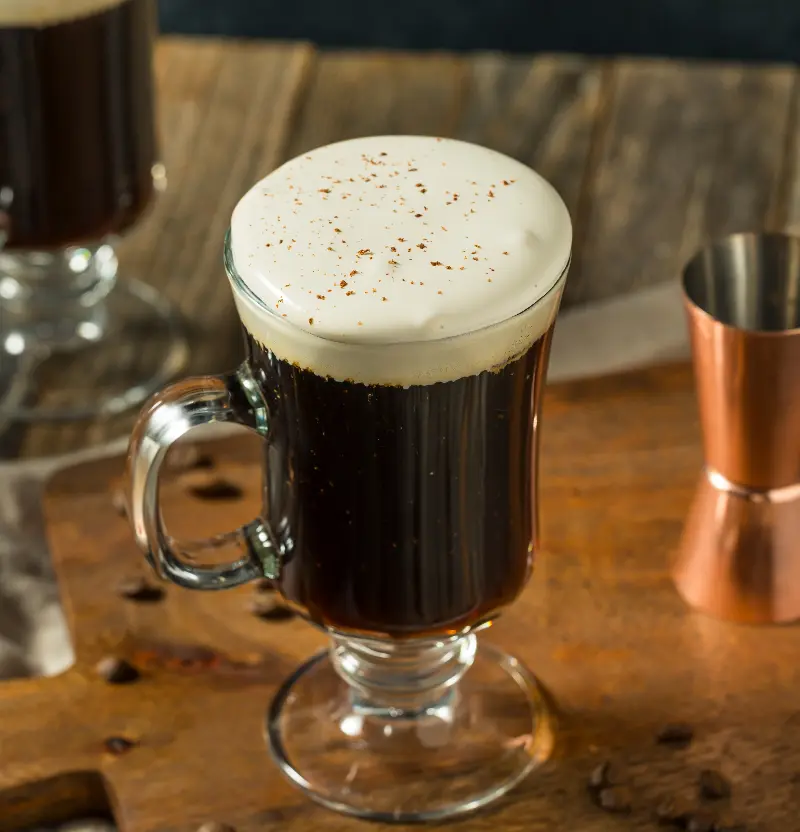
The Irish Coffee is a rare specimen in the world of cocktails: a drink that is simultaneously a stimulant and a sedative. By pairing the invigorating properties of caffeine with the warming, relaxing embrace of Irish whiskey, it creates a sensory experience that is both energizing and comforting. It is not merely a beverage, but a ritual—a liquid blanket designed to shield the drinker from the biting chill of a winter evening or to provide a sophisticated spark of energy during a slow afternoon.
The brilliance of the Irish Coffee lies in its stark internal contrasts. At its foundation is the deep, roasted bitterness of hot coffee, which provides a bold, aromatic canvas. This bitterness is softened by the addition of sugar—often brown sugar for a hint of molasses—which rounds out the sharp edges of the coffee. Then comes the Irish whiskey, which introduces a layer of grainy warmth and a slight peppery kick. The final element, the cream, acts as the peacemaker, adding a rich, fatty texture that binds the disparate flavors together into a harmonious whole.
While many associate the drink with general Irish hospitality, the Irish Coffee has a specific origin story tied to the golden age of transatlantic flight. It was created in the 1940s at the Foynes flying boat base in County Limerick, where it was designed to warm the spirits of weary passengers arriving from the Americas. This origin adds a layer of romanticism to the drink; it was a cocktail born of travel, anticipation, and the need for comfort in a transient world, eventually evolving from a local specialty into a global symbol of Irish culture.
From a technical perspective, the most critical aspect of the Irish Coffee is the "float." Unlike most drinks where ingredients are stirred or shaken into a homogeneous mixture, the Irish Coffee relies on the density difference between the hot, sugary coffee and the cold, heavy cream. When poured correctly over the back of a spoon, the cream sits atop the coffee in a pristine, white layer. This allows the drinker to experience the cocktail in stages: first, the cool, velvety sweetness of the cream, followed by the sudden, piping-hot surge of whiskey and coffee.
In the modern era, the Irish Coffee has expanded far beyond its traditional roots. Today's mixologists experiment with the "coffee" element, utilizing cold brew concentrates for a smoother taste or adding a pinch of cinnamon and sea salt to enhance the aromatic profile. The whiskey, too, has seen variation, with some opting for peated Scotches to add a smoky dimension or using artisanal Irish pot-still whiskeys for a fruitier, creamier finish. Even the cream has evolved, with infused versions (such as vanilla or maple) adding new layers of complexity to the classic formula.
Ultimately, the Irish Coffee transcends the category of "cocktail" to become an experience of pure comfort. It is a drink that demands a slow pace, inviting the drinker to linger over the steam and the scent of toasted grain. Whether served as a celebratory digestif after a heavy meal or as a quiet companion to a book by the fire, it remains a timeless masterpiece of balance, temperature, and timeless Irish warmth.
Best in cold weather, ideal for late morning, after-dinner, or winter night service. Also strongly tied to St. Patrick's Day and cold-weather holiday evenings. ☘️☕
Nutritional and allergen information are estimates and for educational purposes only. Ingredient formulations change frequently across different commercial brands. A generic ingredient name (e.g., "coffee liqueur") may contain hidden allergens, dairy, or animal products depending on the specific brand you purchase.
Always review the manufacturer packaging and actual ingredients you use before consuming, especially if you have severe food allergies or dietary restrictions. Use this website at your own risk.
Discover other related cocktails you might also enjoy, with similar ingredients, style, or spirit.
Explore the curated collections this cocktail belongs to, grouped by spirit, season, holiday, and occasion.
Find cozy fall cocktails with apple, pear, cinnamon, maple, and richer seasonal flavors.

Explore winter cocktails with rich flavors, warming spices, and festive cold-weather appeal.
Find St. Patrick's Day cocktails with Irish-inspired flavors, whiskey drinks, and festive party picks.
Browse Easter cocktails with spring flavors, lighter styles, and brunch-friendly appeal.

Browse Mother's Day cocktails with brunch-friendly pours, floral notes, and polished celebratory drinks.
Find Father's Day cocktails with whiskey-forward classics, bold stirred drinks, and confident summer pours.
Explore Thanksgiving cocktails that pair well with holiday dinners and warm fall flavors.

Find Christmas cocktails for holiday parties, family dinners, and festive seasonal sipping.
Browse whiskey cocktails with bourbon, rye, and other styles ranging from strong classics to smoother mixed drinks.
Explore Irish whiskey cocktails with smooth flavor, easy sipping, and classic pub-inspired appeal.

Find after-dinner cocktails with rich flavors, dessert-friendly profiles, and digestif-style appeal.
Discover other related cocktails you might also enjoy, with similar ingredients, style, or spirit.
Explore the curated collections this cocktail belongs to, grouped by spirit, season, holiday, and occasion.
Find cozy fall cocktails with apple, pear, cinnamon, maple, and richer seasonal flavors.
Explore winter cocktails with rich flavors, warming spices, and festive cold-weather appeal.
Find St. Patrick's Day cocktails with Irish-inspired flavors, whiskey drinks, and festive party picks.
Browse Easter cocktails with spring flavors, lighter styles, and brunch-friendly appeal.
Browse Mother's Day cocktails with brunch-friendly pours, floral notes, and polished celebratory drinks.
Find Father's Day cocktails with whiskey-forward classics, bold stirred drinks, and confident summer pours.
Explore Thanksgiving cocktails that pair well with holiday dinners and warm fall flavors.
Find Christmas cocktails for holiday parties, family dinners, and festive seasonal sipping.
Browse whiskey cocktails with bourbon, rye, and other styles ranging from strong classics to smoother mixed drinks.
Explore Irish whiskey cocktails with smooth flavor, easy sipping, and classic pub-inspired appeal.
Find after-dinner cocktails with rich flavors, dessert-friendly profiles, and digestif-style appeal.


