Cezzi's
© 2026 Cezzis.com | All rights reserved.
© 2026 Cezzis.com | All rights reserved.
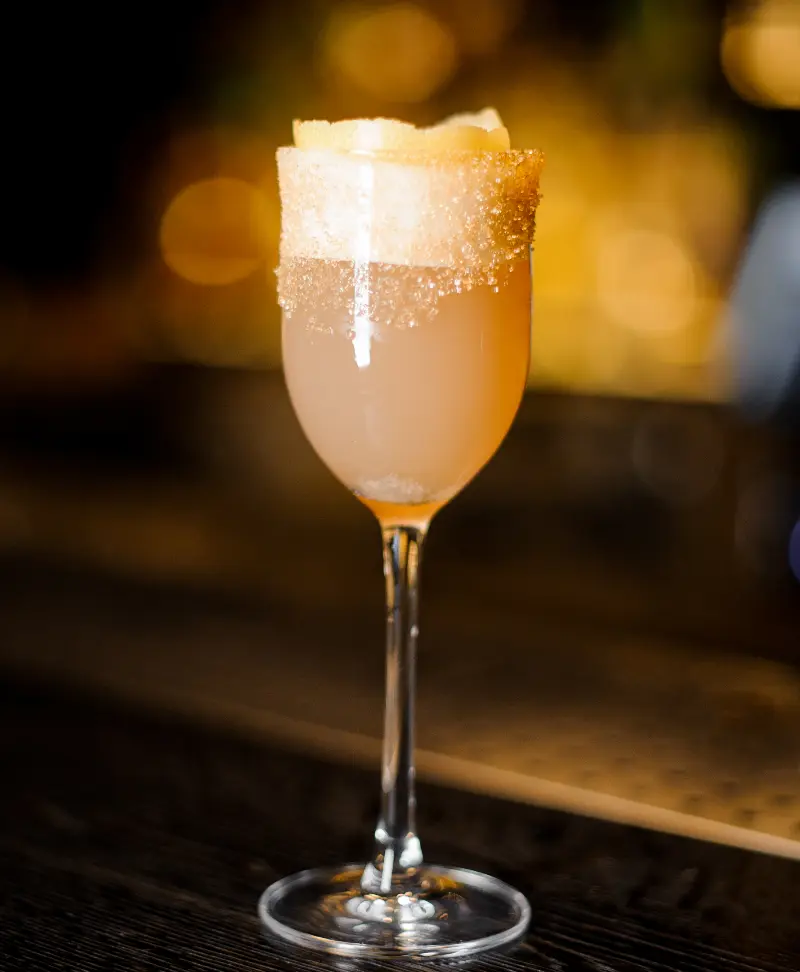
A historic Brandy Crusta with cognac, lemon juice, maraschino, and orange liqueur, served in a sugar-rimmed glass with a long lemon peel.
Servings
1
Long before the Sidecar, the Corpse Reviver, or the modern sour became fixtures of cocktail culture, there was the Brandy Crusta — a drink of remarkable elegance and historical weight. Conceived in New Orleans in the mid-1800s, it is widely considered one of the most consequential cocktails in American bar history, not merely for its own flavor, but for the template it provided to the generations of bartenders who followed.
The Brandy Crusta is commonly credited to Joseph Santini, a bartender working in New Orleans during the 1850s. Santini's creation appeared at a saloon on Gravier Street and was subsequently documented in Jerry Thomas's landmark 1862 bar guide, How to Mix Drinks, one of the earliest American cocktail manuals ever published. Its inclusion in that volume confirmed its standing in the cocktail world and helped preserve the recipe through the long years of Prohibition, when so many drinks were lost.
The name "Crusta" refers to the sugar-coated rim of the glass — a defining feature that distinguishes this drink from its simpler forebears. That encrusted edge was a novelty in its time, adding both a decorative element and a textural counterpoint to the sour, spirit-forward liquid within.
The Brandy Crusta is built on a deceptively complex foundation for its era. The assembly is as much ritual as technique: rimming the glass with sugar, lining it with a single long spiral of lemon peel, then shaking and straining the chilled liquid within.
Cocktail historians point to the Brandy Crusta as the direct ancestor of the Sidecar and a strong influence on the Daisy family of drinks. Its combination of base spirit, citrus juice, and modifying liqueur — shaken and served in a prepared glass — laid out the structural grammar for dozens of the most celebrated cocktails of the 20th century. In that sense, every time a Sidecar is ordered at a bar, there is an echo of Santini's New Orleans creation in the glass.
The IBA (International Bartenders Association) officially recognizes the Brandy Crusta among its list of cocktails, affirming both its historical significance and its continued relevance on modern cocktail menus.
Served in a chilled cocktail glass or coupe with its sugared rim and lemon peel intact, the Brandy Crusta arrives as a study in restraint. It is less sweet than its descendants, more angular in its citrus profile, and more aromatic than a stripped-down sour. The maraschino and orange liqueur contribute supporting roles rather than leading ones, allowing the cognac and lemon to define the character of the drink.
For those with an interest in cocktail history, the Brandy Crusta is not just worth drinking — it is worth understanding. It is a window into an earlier era of American bartending, when craft and presentation were inseparable, and when a single well-made drink could shape the trajectory of an entire culinary tradition.
It shines brightest as an evening aperitif in cooler seasons, especially at holiday dinner parties and New Year's gatherings. 🍋🥃
Nutritional and allergen information are estimates and for educational purposes only. Ingredient formulations change frequently across different commercial brands. A generic ingredient name (e.g., "coffee liqueur") may contain hidden allergens, dairy, or animal products depending on the specific brand you purchase.
Always review the manufacturer packaging and actual ingredients you use before consuming, especially if you have severe food allergies or dietary restrictions. Use this website at your own risk.
Discover other related cocktails you might also enjoy, with similar ingredients, style, or spirit.
Explore the curated collections this cocktail belongs to, grouped by spirit, season, holiday, and occasion.
Discover other related cocktails you might also enjoy, with similar ingredients, style, or spirit.
Explore the curated collections this cocktail belongs to, grouped by spirit, season, holiday, and occasion.